

Beneath the surface of the Costa del Sol, the Nerja Cave preserves thousands of years of geological, archaeological, and cultural history. A unique site where cultural heritage and sustainable tourism coexist thanks to responsible management recognized with the Biosphere Certified distinction and aligned with the Sustainable Development Goals.
Contemplation, Awareness, and Legacy.
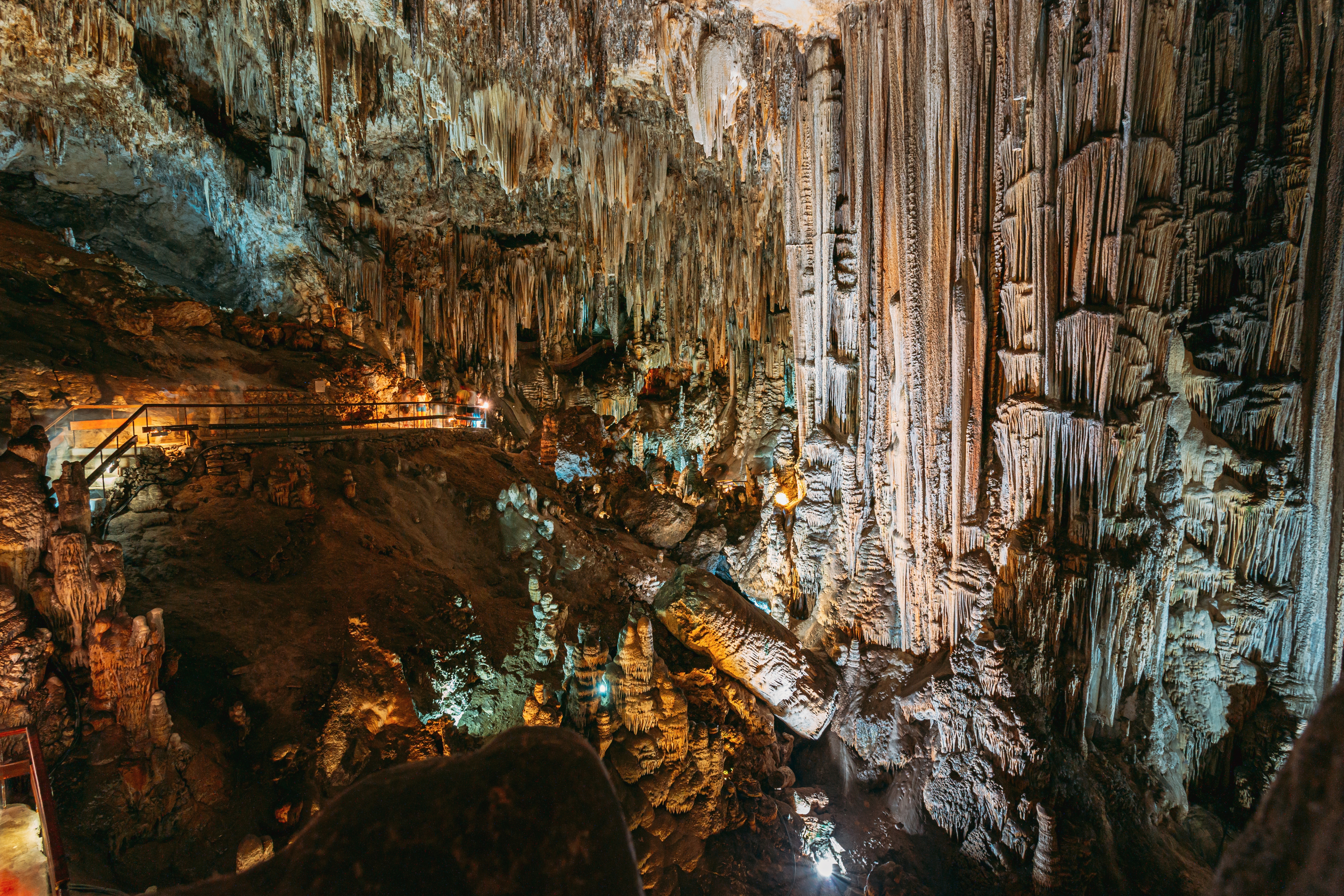
In the depths of the earth, where the light fades and time seems suspended, the Nerja Cave unfolds as an ancient setting that preserves the deepest memory of human presence. Its interior, a vast sanctuary of rock shaped over thousands of years, holds traces of those who walked its galleries when history was not yet written but drawn with mineral pigments on stone.
Visiting the Nerja Cave is not just a tourist experience. It is an exercise in contemplation and awareness that connects archaeology, geology, culture, and sustainability. An example of how cultural heritage can be managed with rigor, sensitivity, and a forward‑looking vision.
An Underground Landscape That Speaks of Time and Humanity.
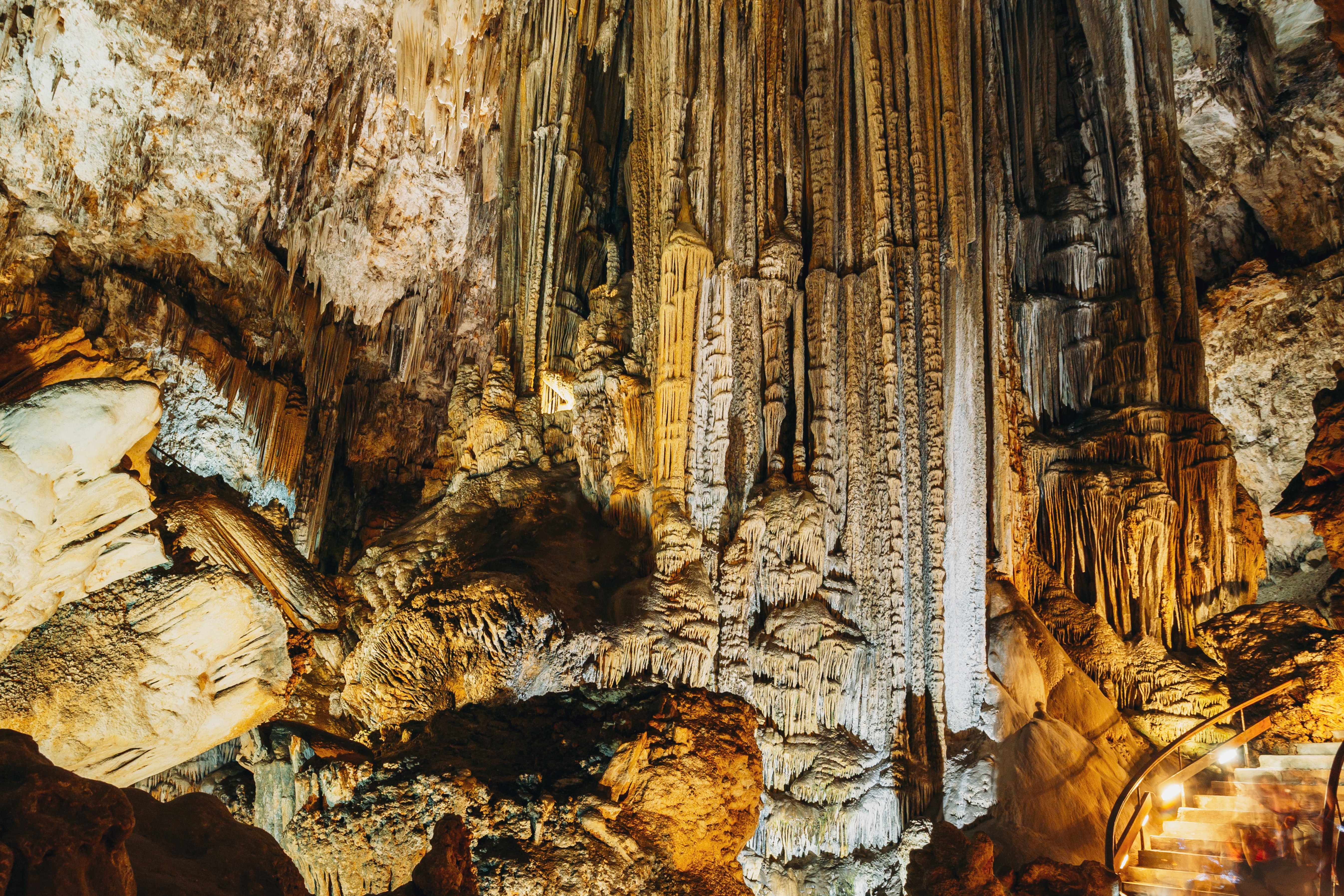
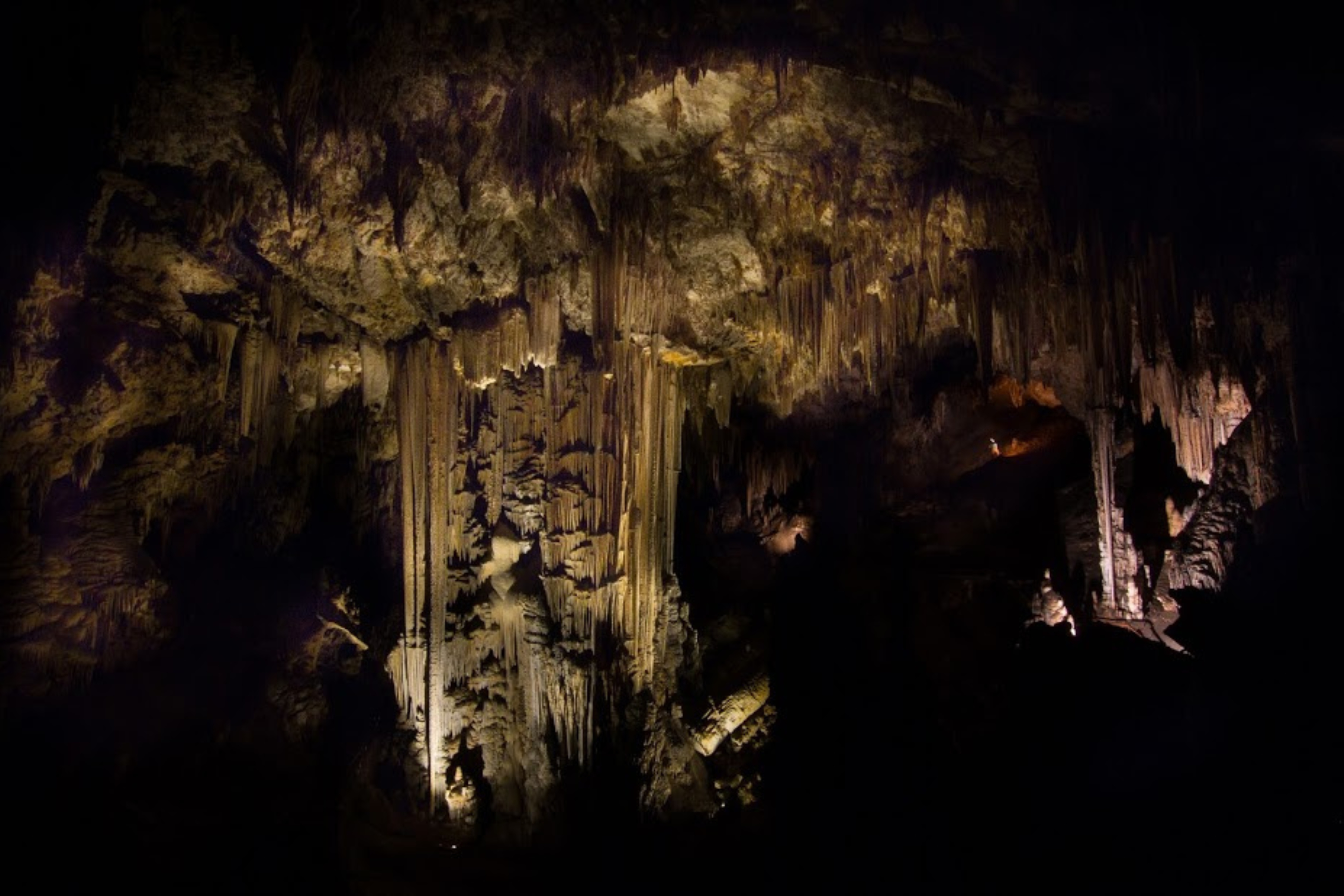
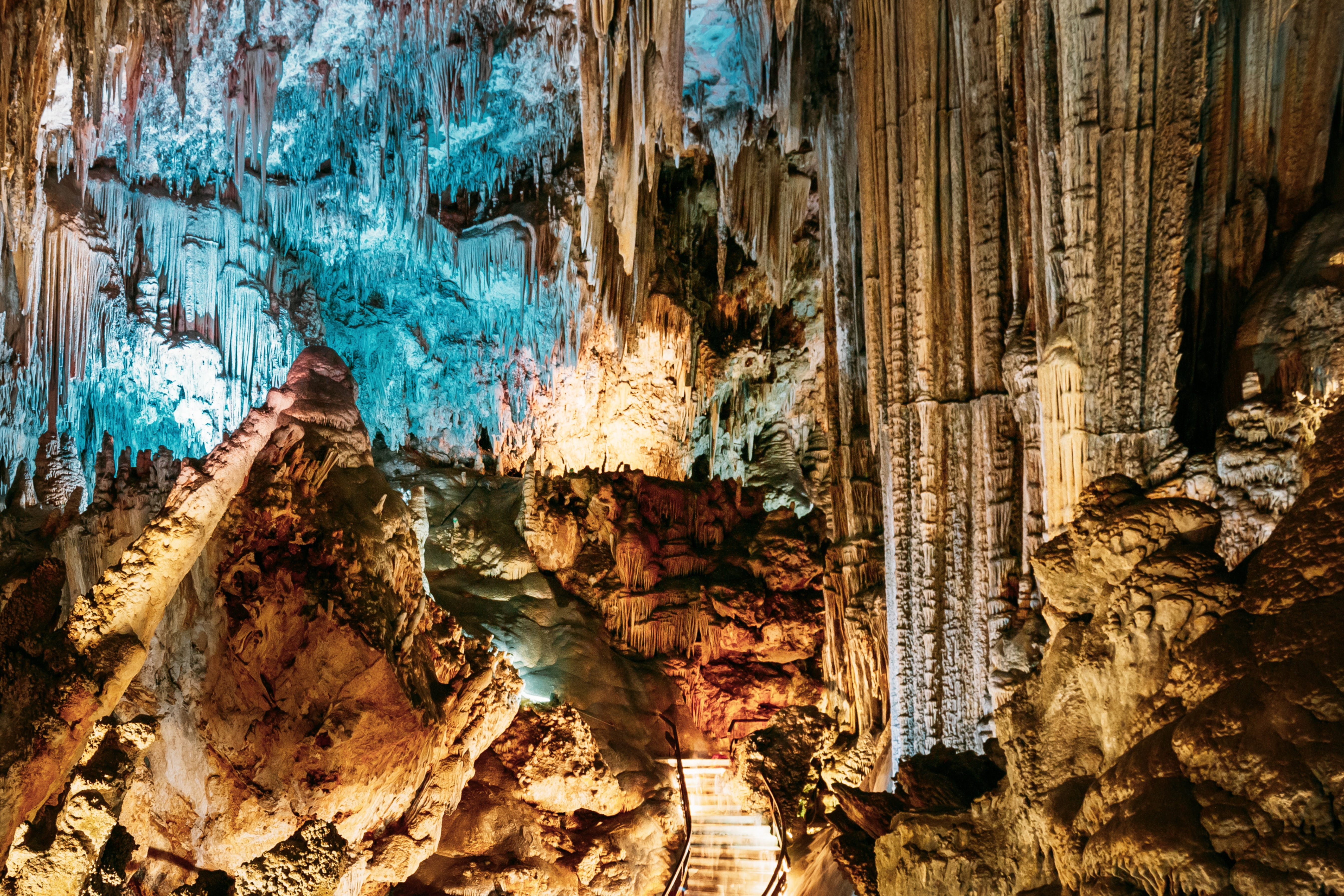
Entering the Nerja Cave is immersing yourself in a primitive world where each falling drop and each calcite formation evoke nature’s infinite patience. Stalactites that descend like crystal threads and stalagmites rising from the floor engage in a silent dialogue that can only be measured in geological eras.
This underground landscape is not static. It is a living, fragile architecture in constant evolution, whose balance depends on responsible management and conscious visitation.
The experience invites visitors to slow down, observe, and understand that we are facing a heritage that does not belong to us, but for which we are temporary stewards.
A Discovery That Transformed Historical Knowledge.
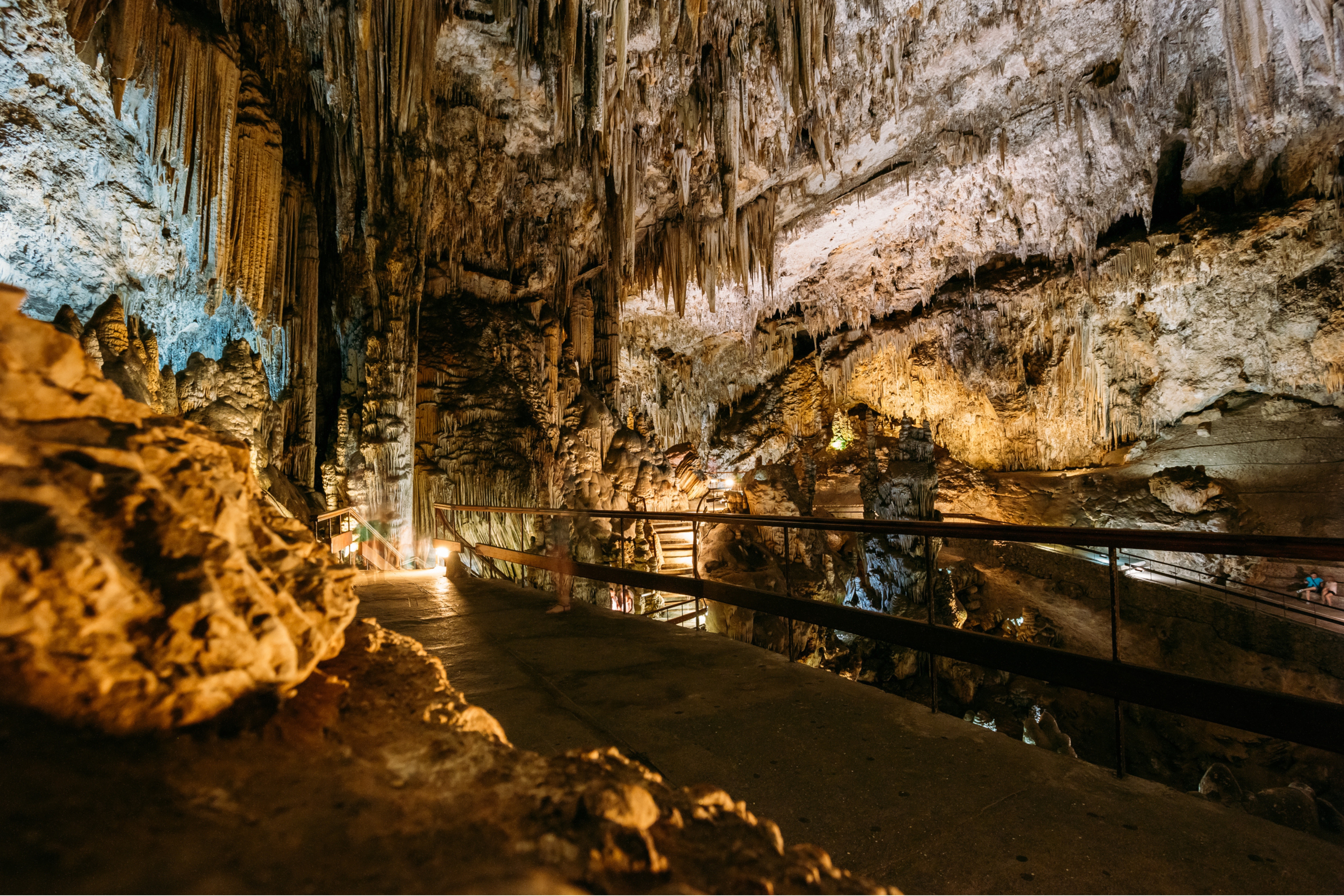
On January 12, 1959, five young people from the town of Nerja accidentally discovered an opening that would forever change the cultural history of the region. What began as a casual exploration ended up revealing human remains, ceramics, and evidence of prehistoric occupation that placed the Nerja Cave among Europe’s most significant archaeological sites.
The cave paintings preserved on its walls, dated between 19,000 and 24,000 years old, show representations of animals made with mineral pigments. These artistic expressions testify to the deep relationship between early human communities and their natural environment and reinforce the universal value of the cave as cultural heritage.
Living Architecture of the Earth.
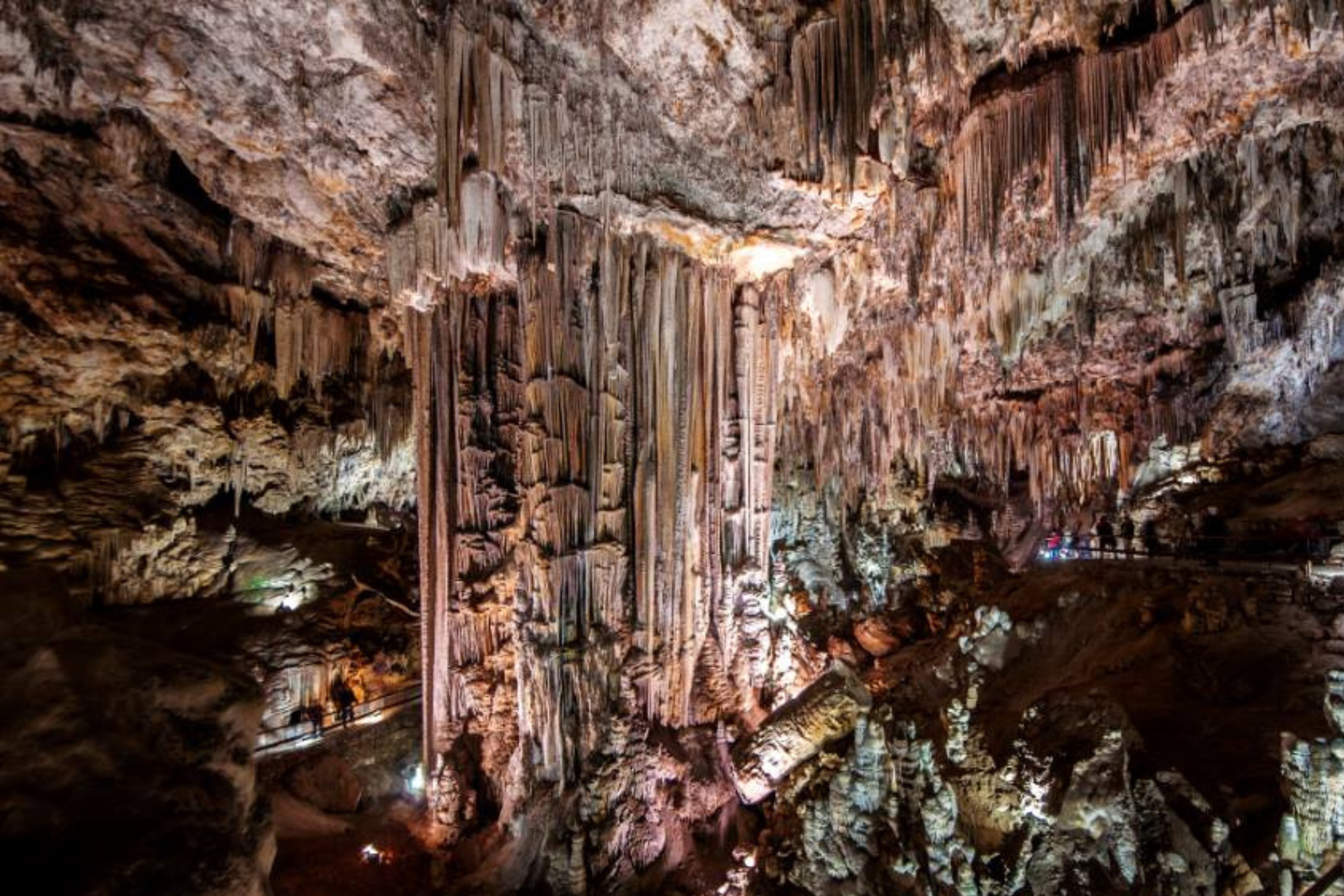
With nearly five kilometers of mapped development, the Nerja Cave is one of the most spectacular underground formations in southern Europe. Areas such as the Hall of the Cataclysm recall the magnitude of the geological processes that, drop by drop, carved this natural cathedral.
Walking through its galleries allows the earth itself to tell its story. A narrative that combines science, aesthetics, and emotion, and that underscores the importance of preserving these spaces with sustainability and long‑term conservation criteria.
Cultural Heritage, Sustainable Tourism, and Responsible Management.
Declared a Site of Cultural Interest, the Nerja Cave is today one of the most visited tourist destinations in Andalusia. However, its significance goes beyond visitor numbers. It is a space for scientific research, a refuge for subterranean biodiversity, and an example of responsible cultural heritage management.
The Public Services Foundation of the Nerja Cave, a nonprofit entity in which the City of Nerja and the Provincial Council of Málaga play key roles, manages this site with a comprehensive vision that combines conservation, education, and local development. Its work has been recognized with the Biosphere Certified distinction, which verifies that sustainable practices are being implemented in a real and measurable way.
Among its notable actions are the use of indicators to assess sustainability progress, support for universal accessibility, and the application of responsible production and consumption criteria. All of this demonstrates that it is possible to reconcile tourism, heritage protection, and social commitment.
Living Culture and Responsible Interpretation.
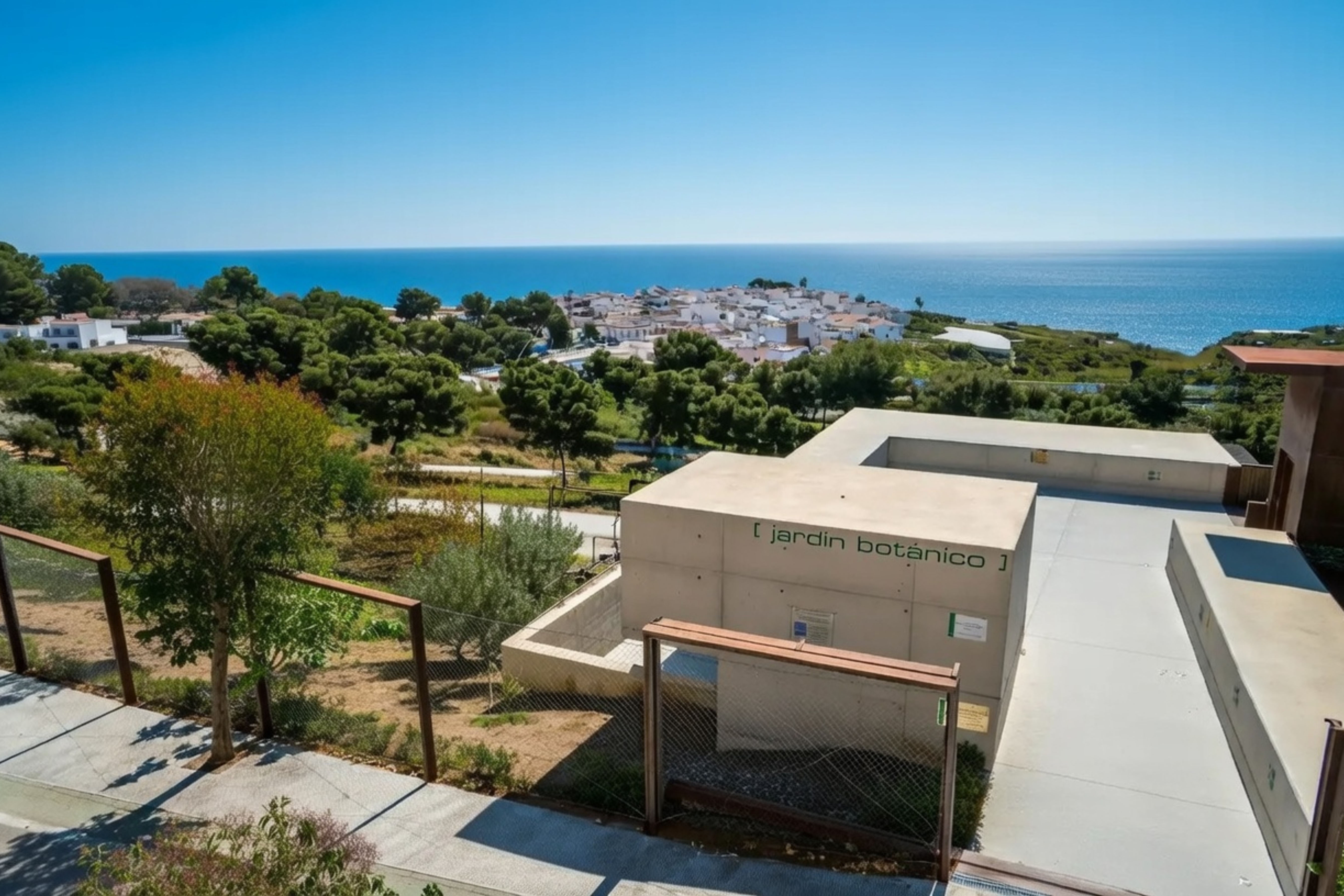
The Nerja Cave experience is completed with initiatives that expand knowledge without compromising conservation. The Detunda Nerja Cave Botanical Garden, the Nerja Museum, and virtual reality spaces allow respectful and educational access to sensitive areas.
In addition, the Nerja Cave Music and Dance Festival turns this setting into a unique cultural stage each summer, where contemporary art engages in dialogue with a landscape millions of years old. An example of how culture can activate a territory without degrading it, strengthening the bond between community, heritage, and sustainability.
Nerja: Territory and Shared Sustainability.
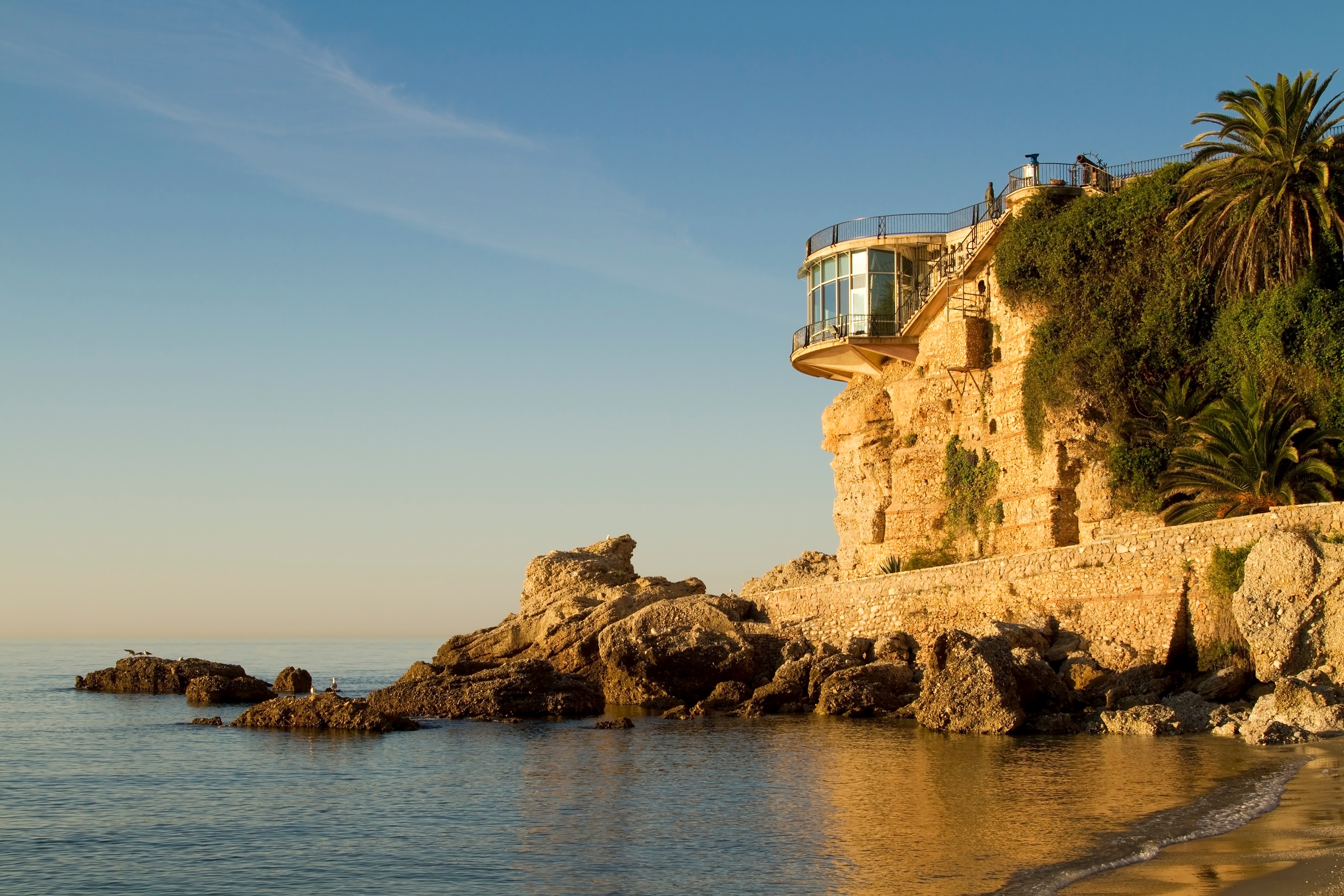
The Nerja Cave is part of a region that combines landscape, culture, and local life. Located on the eastern Costa del Sol, Nerja offers a model where responsible tourism can coexist with community well‑being and protection of the natural environment.
From the Balcón de Europa to its beaches, cliffs, and trails, the municipality reinforces the idea that sustainability is not an isolated action, but a way of understanding tourism and cultural development.
Heritage Aligned with the Sustainable Development Goals.
The management of the Nerja Cave connects directly with several United Nations Sustainable Development Goals (SDGs). It contributes to SDG 11 through cultural heritage protection and universal access, to SDG 12 through responsible resource management practices, and to SDG 8 by promoting quality employment linked to culture and tourism.
At Biosphere, we value spaces like the Nerja Cave because they demonstrate that cultural sustainability is a real lever for transformation. Places where preserving the past becomes a tool for education, awareness, and building the future.
Visiting the Nerja Cave is, ultimately, an act of respect. A reminder that travel can also be a way to care for, understand, and preserve what came before us.


