

Sustainability can no longer be understood as a green marketing strategy. In a context shaped by the Sustainable Development Goals (SDGs), ESG criteria, and increasing regulation against greenwashing, companies and destinations must demonstrate with data, certification, and governance that their commitment is real and verifiable.

Sustainability as marketing or governance?
In recent years, sustainability in tourism has become one of the most frequently used concepts in the sector. It appears in promotional campaigns, websites, brochures, institutional speeches, and, above all, in a constant proliferation of labels, distinctions, and green logos. This phenomenon has also been driven by the widespread adoption of the language of the United Nations Sustainable Development Goals (SDGs) and ESG criteria, which have become part of the corporate discourse of companies and destinations.
However, the more visible tourism sustainability becomes, the more an uncomfortable question arises… Are we facing a problem of visibility or a problem of credibility?
The reality is that we are facing a paradox. The most conscious travelers—those most familiar with concepts such as impact, traceability, or alignment with SDGs and ESG criteria—are not always the ones who trust sustainability labels the most. Meanwhile, less demanding profiles tend to accept them without many questions. The result is a gap between what the sector communicates and what travelers actually believe.

The problem is not the label, but the sustainability approach.
The debate is often framed in marketing terms… Do we need more logos? More campaigns? More presence in digital channels?
But this perspective overlooks an essential issue. From the perspective of Biosphere and the Responsible Tourism Institute (RTI), sustainability is not, and should not be, a promotional narrative, but a management system aligned with recognized international frameworks.
The SDGs are not aspirational messages, but measurable objectives. ESG criteria are not simple commercial statements, but categories for evaluating environmental, social, and governance performance.
When labels are conceived as visibility tools rather than governance instruments, they lose their purpose. At Biosphere, this has always been clear.
Traveler trust is not based on the design of a logo or its repetition, but on the robustness of the approach. This implies defining clear criteria, having an independent evaluation system, providing evidence and measurable data, and ensuring transparency throughout the entire process.
Within this framework, a label such as Biosphere Certified constitutes a tool that provides guarantees for both companies and destinations, as well as for travelers and consumers.
This approach is consistent with standards such as ISO 14001, ISO 50001, ISO 26000, ISO/IEC 17021, and ISO/IEC 17065, widely used as references in sustainable management and sustainability certification.
The relationship is direct. These ISO standards translate sustainability into management systems, criteria, and evidence, not just messages.
- ISO 14001 (environmental management). Provides a framework to identify impacts, comply with legal requirements, set objectives, and continuously improve environmental performance (footprint, waste, resources, etc.). It is sustainability in terms of process and measurable results.
- ISO 50001 (energy management). Focuses on improving energy efficiency and reducing emissions through continuous improvement.
- ISO 26000 (social responsibility). It is not a “certifiable” standard like the previous ones, but a guide to integrating responsible practices in governance, human rights, labor practices, community relations, and the environment, with the explicit objective of contributing to sustainable development.
- ISO/IEC 17021 and ISO/IEC 17065 (credibility of auditing and certification). They do not directly “measure sustainability,” but they support its credibility. They reinforce the technical competence, impartiality, and independence of evaluation bodies. ISO/IEC 17021 establishes requirements for bodies that audit and certify management systems (such as ISO 14001 or ISO 50001), while ISO/IEC 17065 sets requirements for bodies that certify products, services, and processes.
Increasingly, travelers no longer ask only whether a sustainability label exists, but who has granted it, under what standard, and with what guarantees.
This shift in perspective is highly relevant because it moves the focus from mere visibility to technical reliability and process traceability, requiring a transition from sustainability based on aesthetics to sustainability based on verifiable evidence.

From green aesthetics to verifiable evidence in sustainability.
One of the greatest current risks is confusing sustainability with aesthetics. Green colors, natural icons, and well-intentioned messages may create an initial positive perception, but they also fuel skepticism when not accompanied by verifiable, comparable, and auditable evidence.
In a context where greenwashing has become a global concern, and where the European Union has begun actively regulating environmental claims to protect consumers, the existence of unclear or technically unsupported labels can be counterproductive. Rather than generating trust, it raises suspicion.
Credible sustainability requires moving from message to system, from promise to process, and from logo to verification, incorporating indicators aligned with the SDGs, ESG metrics, and internationally recognized methodologies.

Sustainability certification with rigor.
Certifications do not fail due to a lack of visibility. They fail when they do not explain what they measure, how they measure it, and why it is relevant.
A label that is not understood, that cannot be explained clearly, and that is not supported by independent audits, public criteria, and proven methodologies becomes informational noise.
This risk is especially relevant in the European framework, where certification bodies must operate under principles of independence, technical competence, and transparency, aligned with standards such as ISO/IEC 17065 or ISO/IEC 17021.
When a certification translates sustainability into operational criteria, comparable indicators, and continuous improvement processes, it ceases to be decorative and becomes a real tool for sustainable management.
At that point, sustainability stops being marketing and becomes governance.

Governance and the true value of sustainability.
Speaking of governance means acknowledging that sustainability affects decision-making, resource allocation, relationships with the environment, and accountability.
It is not an add-on. It is a structural axis, as reflected in ESG approaches and European corporate sustainability policies.
From this perspective, certifications make sense when they help organize management, facilitate external evaluation, allow honest communication about what is being done and what still needs improvement, and reinforce consistency between strategy, operations, and communication.
Responsible sustainability is not built on promises of perfection, but on verifiable commitments. It demonstrates commitment, progress, and coherence, supported by recognized standards and verifiable processes.
In practice, governance translates into defined responsibilities, objectives and action plans with timelines, monitoring mechanisms, and internal control systems that allow periodic evaluation of results. In other words, it involves moving from generic statements to manageable commitments, with indicators that demonstrate progress and correct deviations.
A rigorous certification adds value when it acts as a framework. It organizes information, establishes comparable criteria, incorporates external verification, and facilitates accountability to clients, investors, public administrations, and citizens. It does not replace management, but strengthens it by introducing methodological discipline and promoting continuous improvement.
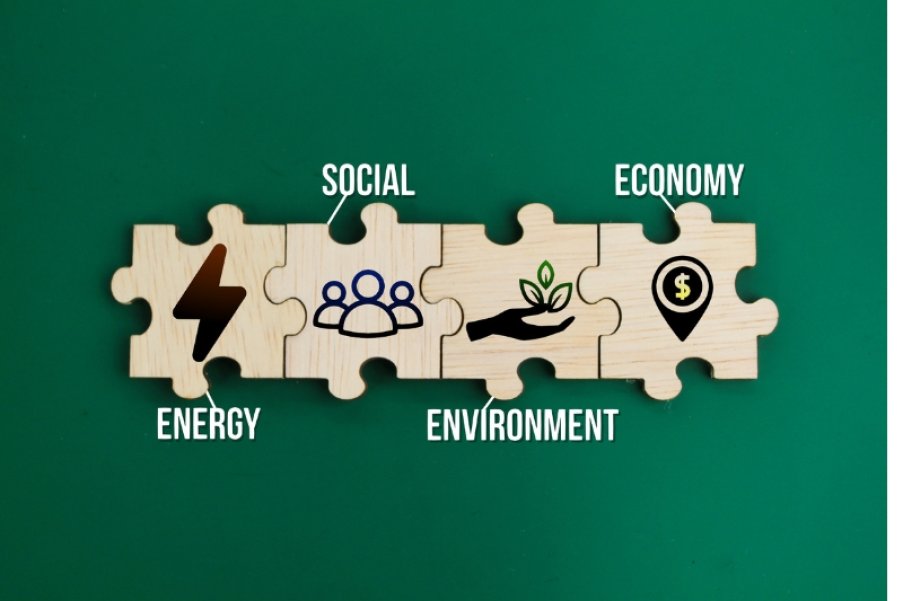
Biosphere and ITR, when sustainability becomes a management system.
An example of how sustainability can move from discourse to a verifiable system is the model developed by Biosphere Sustainable, methodologically driven by the Responsible Tourism Institute (RTI).
The Biosphere Certified label for companies and Biosphere Certified Destination for destinations are designed as governance tools, aligned with the United Nations Sustainable Development Goals (SDGs), ESG criteria, and international standards.
In the case of companies, Biosphere Certified translates sustainable commitments into measurable indicators and evaluable actions, facilitating traceability of environmental, social, and governance performance. It links sustainability to operational criteria, connecting each commitment with a specific SDG, measurable indicators, and evaluable actions. This approach allows sustainability to be integrated into daily management and facilitates performance traceability—an essential aspect for markets, regulators, and consumers.
At the territorial level, the Biosphere Certified Destination distinction helps destinations diagnose their situation, define action plans, and periodically evaluate their progress in tourism sustainability. Here, certification does not act as a promotional campaign, but as a structural framework for tourism policy, involving administrations, companies, and local stakeholders under a shared vision aligned with the SDGs.
The role of the Responsible Tourism Institute (ITR) is decisive in this model. As the entity driving the Biosphere methodology, the ITR ensures that criteria are public, coherent, and aligned with international standards, incorporating external evaluation and continuous improvement. In particular, this approach directly connects with European requirements regarding certification credibility, independence of evaluation bodies, and consumer protection against ambiguous environmental claims.
In a context of increasing regulation against greenwashing, models such as Biosphere show that sustainability only generates trust when it is supported by verifiable systems, compatible with ISO standards, independent audits, and clear ESG alignment.
At this point, certification ceases to be decorative and becomes a real governance tool, capable of organizing management, facilitating accountability, and communicating with honesty.

Less marketing, more evidence in sustainability.
The future of sustainability is not about competing over who has the most visible labels, but about who is best able to explain their impact through data, processes, and understandable verification (for travelers, regulators, and the market).
In an increasingly demanding regulatory environment that penalizes ambiguous environmental claims, the question is no longer how to make sustainability more attractive. The question is how to make it more credible.
Because the dilemma is not between visibility and rigor. It is between appearing sustainable or being sustainable.


